
Understanding Treatment-Resistant Depression: Could Ketamine Therapy Be an Option for You?
March 13, 2025 2026-03-13 12:51Understanding Treatment-Resistant Depression: Could Ketamine Therapy Be an Option for You?
 thepsychestore doctor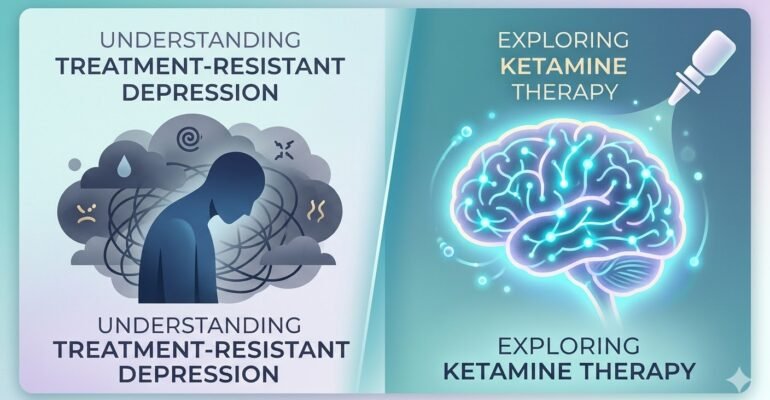
Understanding Treatment-Resistant Depression: Could Ketamine Therapy Be an Option for You?
Understanding Treatment-Resistant Depression: Could Ketamine Therapy Be an Option for You?
Medically Reviewed | ThePsycheStore.com | Mental Health Resource
Reading Time: ~8 minutes
If you or someone you love has been living with depression that does not respond to standard treatments, you are not alone. Treatment-resistant depression (TRD) affects millions of people worldwide — and for many of them, the search for relief can feel exhausting and hopeless. But there is new hope on the horizon. Ketamine therapy has emerged as one of the most promising breakthroughs in mental health treatment in decades, offering rapid relief even for people who have tried multiple antidepressants without success.
This guide is designed to help you understand what treatment-resistant depression is, how ketamine therapy works, who it may be right for, and what to expect if you decide to explore this option.
What Is Treatment-Resistant Depression (TRD)?
Depression is one of the most common mental health conditions globally, affecting more than 280 million people. While many individuals respond well to first-line treatments such as selective serotonin reuptake inhibitors (SSRIs) or cognitive behavioral therapy (CBT), roughly 30% of people with major depressive disorder do not experience adequate relief — even after trying two or more different medications.
A depression diagnosis is generally considered treatment-resistant when:
- You have tried at least two different antidepressant medications at adequate doses.
- Each medication was taken for a sufficient duration (typically 6–8 weeks).
- You still experience significant depressive symptoms that impair daily functioning.
- Other contributing factors (thyroid problems, sleep disorders, etc.) have been ruled out.
Living with TRD can be debilitating. It is associated with increased risk of suicidal thoughts, loss of ability to work, and significantly reduced quality of life. The need for new, effective treatments is urgent — and that is precisely where ketamine therapy has stepped in.
What Is Ketamine Therapy?
Ketamine is an FDA-approved anesthetic that has been used safely in medical settings for over 50 years. In recent years, researchers and clinicians have discovered that at sub-anesthetic doses, ketamine has powerful and rapid antidepressant effects — working within hours rather than the weeks or months typical of traditional antidepressants.
There are two main forms used in mental health treatment today:
1. Intravenous (IV) Ketamine Infusions
Racemic ketamine delivered via an IV drip is the most studied form. Sessions typically last 40–60 minutes and are administered in a clinical setting. Most protocols involve a series of 6 infusions over 2–3 weeks, followed by maintenance sessions as needed.
2. Esketamine (Spravato) Nasal Spray
Esketamine (brand name Spravato) is the FDA-approved nasal spray form specifically indicated for treatment-resistant depression and major depressive disorder with suicidal ideation. It is self-administered under medical supervision and is covered by some insurance plans. It must be used in a certified healthcare setting due to the risk of sedation and dissociation.
How Does Ketamine Work for Depression?
Traditional antidepressants primarily target the serotonin, dopamine, or norepinephrine systems. Ketamine works differently — it targets the glutamate system, specifically blocking NMDA (N-methyl-D-aspartate) receptors in the brain.
This mechanism produces several important effects:
- Rapid synaptogenesis: Ketamine stimulates the growth of new synaptic connections in the prefrontal cortex — an area of the brain heavily impacted by depression.
- BDNF release: It increases brain-derived neurotrophic factor (BDNF), a protein that supports neuron survival and growth.
- Glutamate modulation: It rebalances glutamate activity, which is disrupted in many people with depression.
- Anti-inflammatory effects: Emerging evidence suggests ketamine may reduce neuroinflammation, which plays a role in depression.
The result? Many patients report a significant lifting of depressive symptoms — including reduced suicidal ideation — within hours to days of their first session. This speed is especially critical for patients in severe distress.
What Does the Research Say?
The body of research supporting ketamine for treatment-resistant depression has grown substantially over the past two decades. Here are key findings:
- A landmark 2000 study published in Biological Psychiatry was among the first to demonstrate ketamine’s rapid antidepressant effects in humans, with results appearing within hours.
- Multiple meta-analyses have confirmed response rates of 50–70% in patients with TRD — a significant figure given that these patients had failed multiple prior treatments.
- The FDA approved esketamine (Spravato) in 2019 for treatment-resistant depression, marking a major regulatory milestone and the first genuinely new antidepressant mechanism approved in decades.
- Studies also suggest benefits for bipolar depression, PTSD, anxiety disorders, and OCD, though these are still being actively researched.
Who Is a Good Candidate for Ketamine Therapy?
Ketamine therapy is not for everyone, and a thorough evaluation by a qualified provider is essential. You may be a good candidate if you:
- Have been diagnosed with major depressive disorder (MDD) or bipolar depression.
- Have tried at least two antidepressants without adequate response.
- Are experiencing significant functional impairment or suicidal ideation.
- Do not have contraindicated conditions (see below).
Ketamine therapy may NOT be appropriate if you have:
- A personal or family history of schizophrenia or psychosis.
- Active or uncontrolled substance use disorder (particularly dissociatives or stimulants).
- Uncontrolled hypertension or serious cardiovascular conditions.
- Pregnancy or breastfeeding.
- Certain thyroid conditions or increased intracranial pressure.
What to Expect During a Ketamine Treatment Session
Many people feel anxious about trying a new treatment, especially one with psychedelic properties. Here is a step-by-step overview of what a typical ketamine infusion session involves:
- Initial Assessment: Your provider will conduct a thorough psychiatric and medical evaluation to confirm eligibility and discuss goals.
- Preparation: You will be advised to fast for several hours before treatment and arrange transportation, as you cannot drive afterward.
- The Infusion: You will recline in a comfortable chair or bed. An IV is placed, and the ketamine is administered slowly over 40–60 minutes. Most clinics provide eye shades and calming music to enhance the experience.
- During the Session: You may experience mild dissociation, visual effects, or a floating sensation. This is normal and temporary. Medical staff monitor your vitals throughout.
- Recovery: After the drip ends, you will rest in the clinic for 30–60 minutes until you feel stable. Side effects such as nausea, dizziness, or disorientation typically resolve quickly.
- Integration: Many providers recommend integration therapy — talking with a therapist after sessions to help process the experience and reinforce positive changes.
How Long Do the Effects Last?
This is one of the most common questions patients ask. The honest answer is: it varies. Some people experience lasting relief for weeks or months after an initial series of infusions. Others find that symptoms return after a few weeks and benefit from periodic maintenance sessions.
Factors that influence duration of response include the severity of your depression, whether you also engage in psychotherapy, your overall physical health, sleep quality, and whether underlying stressors are addressed.
Most clinics structure treatment as an initial series of 6 infusions over 2–3 weeks, followed by booster sessions every 4–8 weeks as needed. Some patients are able to taper and eventually discontinue maintenance as their condition stabilizes.
Potential Side Effects and Risks
Ketamine therapy is generally well-tolerated when administered by qualified medical professionals. However, as with any medical treatment, there are potential side effects and risks to be aware of:
Short-term side effects (usually resolve within hours):
- Dissociation or depersonalization during infusion
- Nausea or vomiting
- Elevated blood pressure and heart rate
- Dizziness or lightheadedness
- Headache
Longer-term considerations:
- Potential for psychological dependence with frequent or unsupervised use.
- Bladder complications with very high doses or prolonged recreational misuse (rare in therapeutic settings).
- Cognitive effects: Some patients report short-term memory or concentration issues immediately after sessions, which typically resolve.
It is important to note that the risks associated with ketamine therapy in supervised clinical settings are significantly lower than the risks of uncontrolled, treatment-resistant depression itself — particularly regarding suicide risk.
How Much Does Ketamine Therapy Cost?
Cost is a significant consideration for many patients. IV ketamine infusions are not yet consistently covered by insurance for depression (though this is changing). A single infusion can range from $400 to $800, and a full initial series of 6 infusions may cost $2,400 to $4,800 out of pocket.
Esketamine (Spravato) nasal spray, as an FDA-approved medication, is more likely to be covered by insurance plans. Patients should check with their provider and insurer about eligibility and prior authorization requirements.
Some clinics offer payment plans, sliding scale fees, or financing options. Given the chronic nature of treatment-resistant depression and the costs of ongoing failed treatments, many patients find that ketamine therapy provides significant long-term value.
Ketamine Therapy vs. Other TRD Treatments
Ketamine is one of several options available for treatment-resistant depression. Understanding how it compares to alternatives can help you make an informed decision with your care team:
Treatment | Speed of Action | Response Rate in TRD | Availability |
Ketamine / Esketamine | Hours to days | 50–70% | Clinics & online providers |
ECT (Electroconvulsive Therapy) | Weeks | 60–80% | Hospitals / specialty centers |
TMS (Transcranial Magnetic Stimulation) | 4–6 weeks | 30–50% | Specialist clinics |
MAOI Antidepressants | 2–6 weeks | Variable | Prescription (psychiatrist) |
How to Talk to Your Doctor About Ketamine Therapy
Starting a conversation about ketamine therapy can feel daunting, but your mental health is worth advocating for. Here are some key questions to bring to your next appointment:
- “Based on my history, do I meet the criteria for treatment-resistant depression?”
- “Have we exhausted all standard options, or are there medications we have not yet tried?”
- “Could you refer me to a ketamine treatment center or esketamine-certified provider?”
- “Would ketamine therapy interact with my current medications?”
- “What follow-up and integration support would be provided?”
Frequently Asked Questions About Ketamine Therapy
Is ketamine therapy addictive?
When administered in a supervised clinical setting at therapeutic doses, the risk of addiction is low. However, it is important that treatment is managed by licensed professionals and that use is not continued outside of a structured protocol.
Is ketamine the same as a “street drug”?
Ketamine has unfortunately been misused recreationally. However, medical-grade ketamine used in clinical settings is a completely different context — carefully dosed, monitored, and combined with therapeutic support to achieve healing outcomes.
Will I feel “high” during treatment?
At sub-anesthetic doses, ketamine can produce mild dissociation, altered perceptions, or a dreamlike state. This is temporary and typically resolves within 30–60 minutes of the infusion ending. Many patients find the experience novel but manageable, especially with preparation and support.
Can ketamine be used alongside my current medications?
Often yes, but this requires careful evaluation. Some medications may need to be adjusted before treatment. Your prescribing provider will review all current medications during your intake assessment.
Taking the Next Step
Treatment-resistant depression is one of the most challenging conditions in mental health — but it is not the end of the road. Ketamine therapy represents a legitimate, evidence-backed option that has brought meaningful relief to thousands of people who had given up hope.
If you believe you may have treatment-resistant depression, the most important first step is to speak with a qualified mental health professional who can evaluate your history, discuss all available options, and guide you toward the safest and most effective path forward for you.
At ThePsycheStore.com, we are committed to providing evidence-based information and connecting patients with qualified care. If you have questions about ketamine therapy or other mental health treatments, browse our resource library or reach out to one of our professionals for guidance.
Medical Disclaimer
This article is intended for informational and educational purposes only and does not constitute medical advice. Always consult with a licensed healthcare professional before starting, changing, or stopping any treatment. If you are experiencing a mental health crisis or suicidal thoughts, please contact the 988 Suicide & Crisis Lifeline by calling or texting 988.
Search
Categories